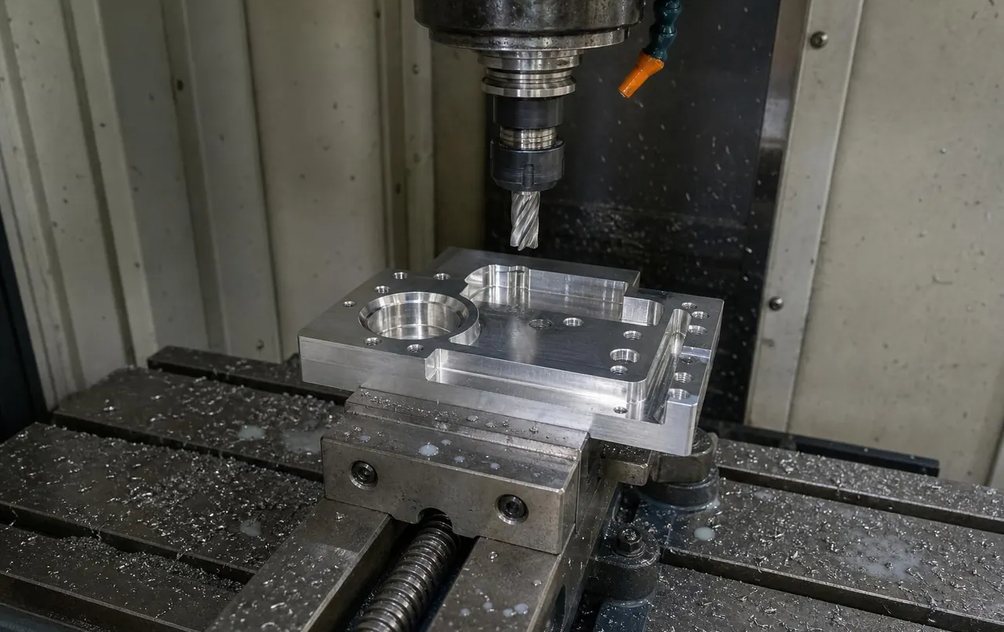
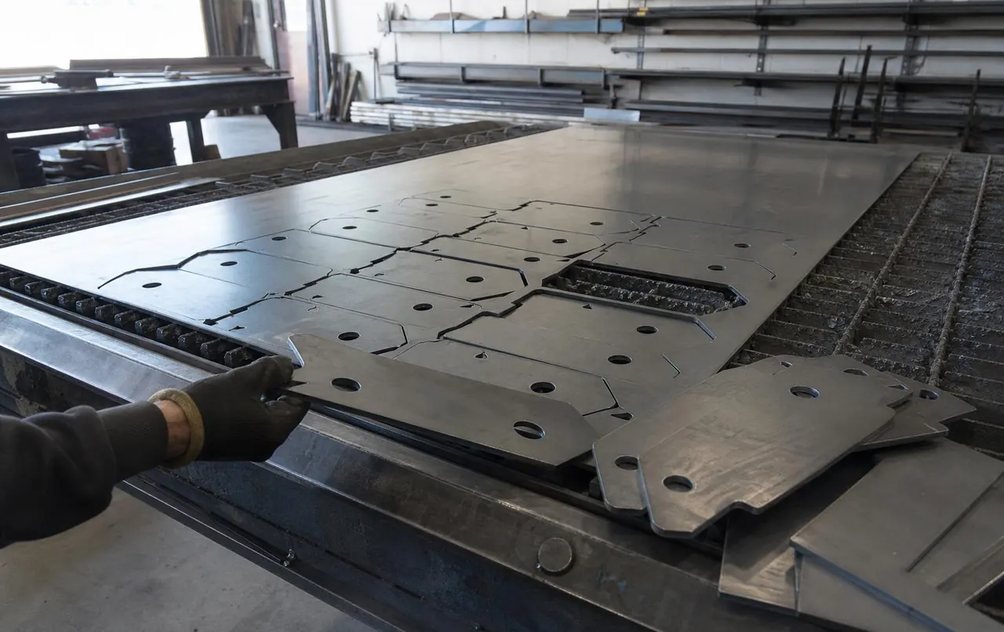
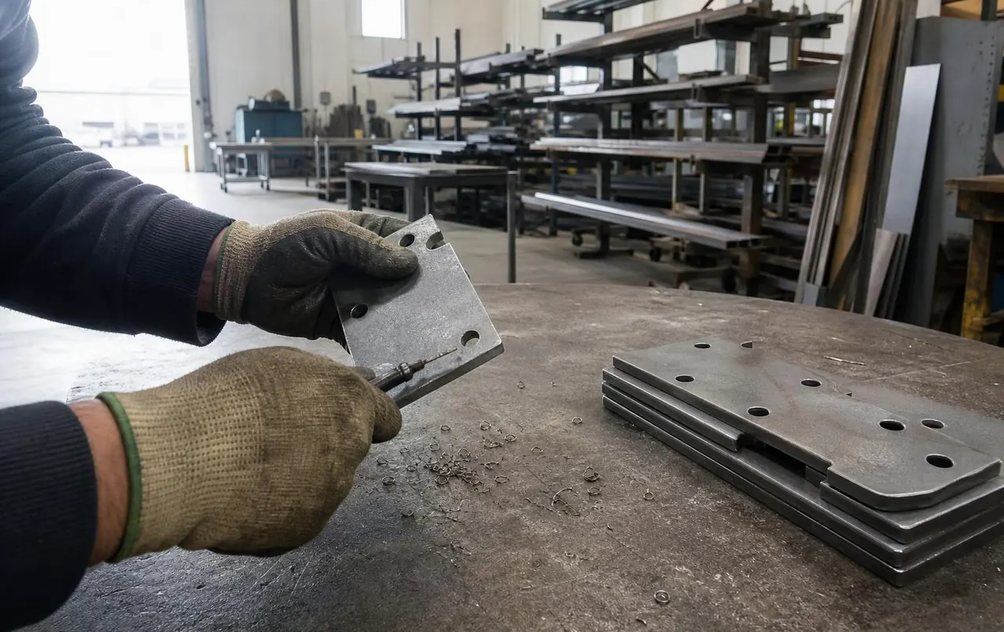
Aluminum is the material many of our customers choose when weight matters, when the part will be seen, or when it has to resist the weather without paint. It is light, it machines beautifully and it takes a clean brushed or bead finish. It also marks easily, bends differently from steel and does not forgive a careless edge. Aluminum fabrication is about respecting those habits.
We keep aluminum work separate from steel work on the bench, so steel dust and chips do not end up pressed into a soft aluminum surface. Sheets are handled with gloves and kept in their film until the last step when possible. Bends are planned with radii that suit the alloy and thickness, because aluminum cracks if it is folded too tightly.
From a single machined block to a batch of bent covers, aluminum parts follow the same route as everything else in the shop: a review of your drawing, a written quote, a first piece for your approval and then the batch.
How a job moves through the shop
1
Alloy and finish
Tell us the alloy if you know it and the finish you expect on visible faces.
2
Plan bends and holes
Bend radii and hole positions are checked so the part forms without cracking.
3
Make and protect
Parts are cut, formed and machined, with faces protected between steps.
4
Finish and pack
Edges are deburred, the finish is applied and parts are packed so faces stay clean.
Parts we often make this way
Light mounting brackets
Electronics covers and boxes
Display and control panels
Rails and trim strips cut from extrusion
Machined spacers and adapter plates
Prototype housings
Choosing the right aluminum
Aluminum comes in many alloys, and the choice changes how the part behaves. Some alloys bend easily and are the usual pick for sheet metal covers. Others are stronger and machine well, which suits blocks and plates. If your drawing names an alloy, we follow it. If it does not, we ask how the part will be used and suggest a common alloy that suits bending, machining or both.
Thickness matters too. Thin sheet makes light covers but can dent and flex, so a flange or a second bend often adds the stiffness a flat panel lacks. We point out where a small change in the design would make the part feel more solid in the hand.
Looking after the surface
A scratch on a steel bracket that will be painted is easy to hide. A scratch on a brushed aluminum panel is there for good. For visible aluminum parts, we plan the order of operations so the finished faces are handled as little as possible, keep film on until the end and pack parts with sheets of paper or foam between them.
Common questions about aluminum fabrication
Can you bend thick aluminum?
It depends on the alloy, thickness and bend radius. Some alloys bend well; others are better machined or cut. Send the drawing and we will tell you what works.
Do you anodize or paint aluminum?
Coating is done by outside finishers. We can prepare and deburr the parts for coating and tell you what the finisher will need.
Can aluminum and steel parts be combined in one assembly?
Yes, with the right hardware and some care to keep the metals separated where moisture is present. We point this out when we review the design.
Is aluminum harder to work with than steel?
Not harder, just different. It is softer and marks easily, and it needs bigger bend radii. We plan for those habits from the start.
Often booked together
Parts rarely need one step only. These services are the ones most often quoted alongside aluminum fabrication.
Your cookie choice. We use necessary cookies so pages and forms work. Optional analytics and advertising cookies stay off until you say yes. Cookie Policy
Cookie Choices
Choose which optional cookies this site may use. Your choice is kept for 180 days. A Global Privacy Control signal from your browser is treated as a rejection of optional cookies.
Strictly necessaryAlways on
Run the basic site functions and security, and store your cookie choice.
Count page visits in general terms. Stays off unless you switch it on.
Measure whether an ad led to a quote request. Off unless you turn it on.
Your browser sends a Global Privacy Control signal, so optional cookies stay off.