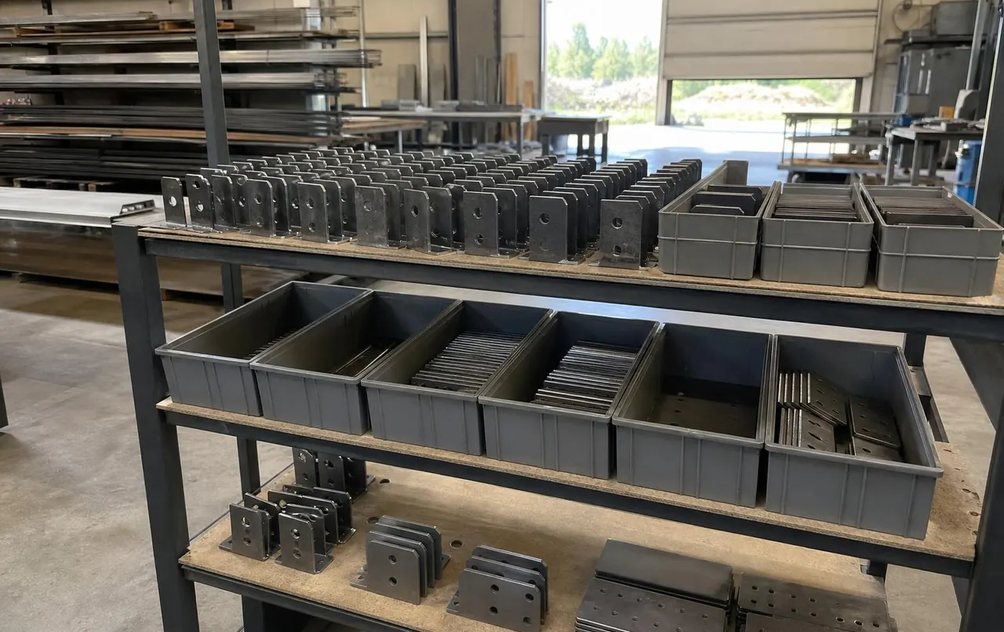
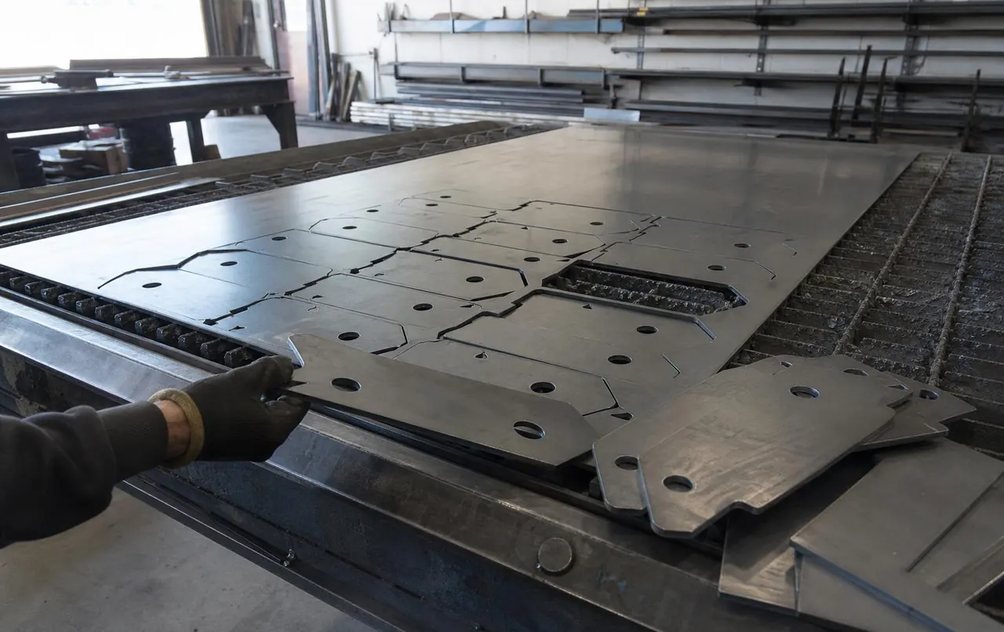
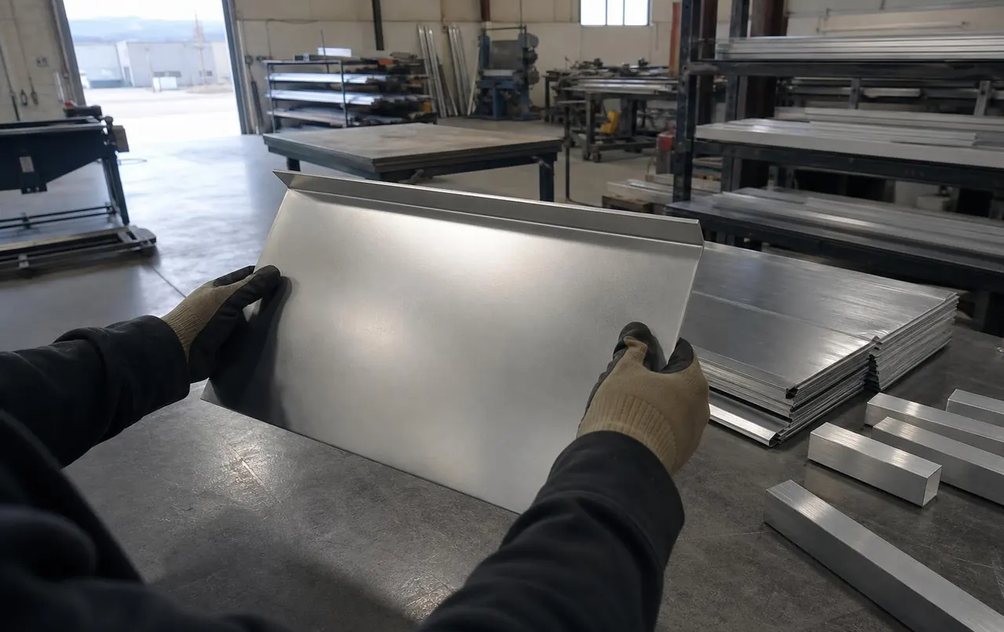
Production is the stage where the design is settled and the job is to make the same part again and again, with nothing left to chance. The questions change. Instead of asking whether the part works, we ask how to make every piece match the approved one, how to use material well and how you want the parts packed.
Three services carry this stage. Metal parts fabrication takes a part from flat stock to finished and packed. Precision metal cutting produces clean blanks and flat parts, either for our own next steps or for your line. Aluminum fabrication covers the light, visible parts that need more care for the surface.
Blanks for a batch are cut together from one lot of material and bent against the same stops.
First part at every step
The first part off each step is compared with the approved sample before the rest follow.
Notes travel with the job
Anything that surprised us during the run goes into the job folder for next time.
From small batch to repeat runs
A first production order is often a small batch of a few dozen parts. If it goes into regular use, later orders become repeat runs. For each repeat run we pull out the saved setup notes, the holding fixtures and any machining program, check the drawing revision with you and make a first part to compare with the approved sample. That routine is what lets a part ordered months apart still look the same.
Quantities depend on the part. A small bracket in a batch of a few hundred is a comfortable job for our shop; a large cover in the same quantity may be split into lots. Tell us the quantity and size, and we will say how we would plan it.
Your cookie choice. We use necessary cookies so pages and forms work. Optional analytics and advertising cookies stay off until you say yes. Cookie Policy
Cookie Choices
Choose which optional cookies this site may use. Your choice is kept for 180 days. A Global Privacy Control signal from your browser is treated as a rejection of optional cookies.
Strictly necessaryAlways on
Run the basic site functions and security, and store your cookie choice.
Count page visits in general terms. Stays off unless you switch it on.
Measure whether an ad led to a quote request. Off unless you turn it on.
Your browser sends a Global Privacy Control signal, so optional cookies stay off.