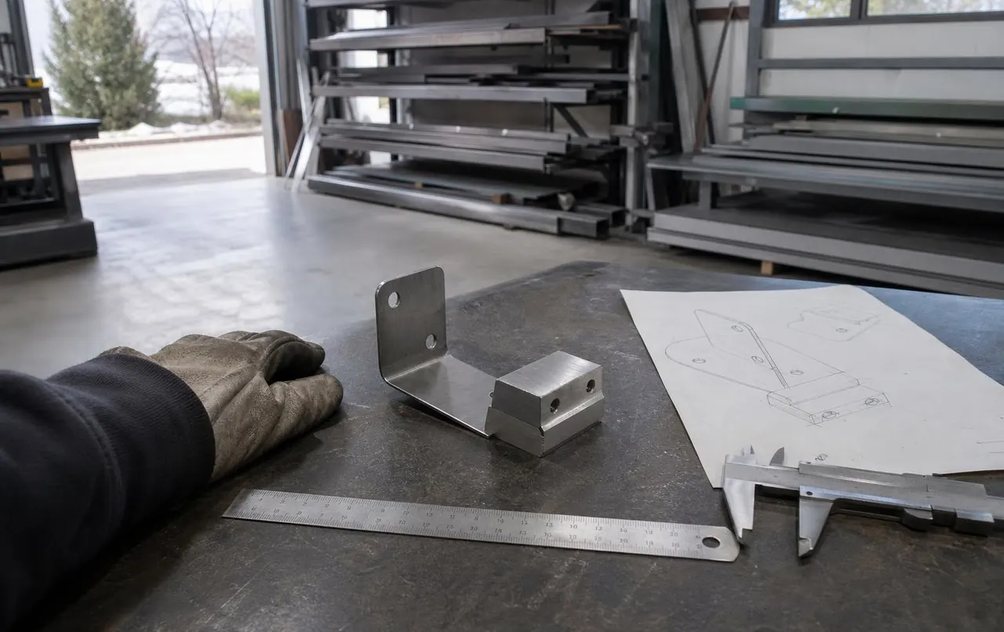
Some features can only be made by cutting metal away: a flat face where two parts meet, a pocket that saves weight, a slot that lets a part adjust, a pattern of holes that has to line up with something else. CNC machining is how we make those features repeatable. The machine follows the same program every time, so the tenth part matches the first.
In the prototype stage, machining is often paired with sheet metal. A bent cover might need a machined block to mount to, or a cut plate might need a precise bore for a bearing. We machine the parts that need it and keep the rest simple, so you only pay for precision where the part actually needs it.
Tell us which surfaces and dimensions matter most. We confirm the tolerances in the quote, in plain words, before any material is cut. If a feature on the drawing is hard to machine, we suggest an alternative that does the same job.
How a job moves through the shop
1
Drawing or model
Send a drawing, a model file or both. Mark the features that have to fit something else.
2
Quote with the details that matter
We list the material, the key features and the tolerances we will hold, in plain words.
3
Setup and first part
The part is held, programmed and cut. The first one is checked against your drawing.
4
Finish and handover
Edges are broken, chips cleaned off and the parts packed so machined faces stay clean.
Parts we often make this way
Mounting blocks and spacers
Bearing and shaft supports
Adapter plates with hole patterns
Small housings and covers
Jig and fixture plates
Knobs, bosses and standoffs
Choosing between machining and cutting
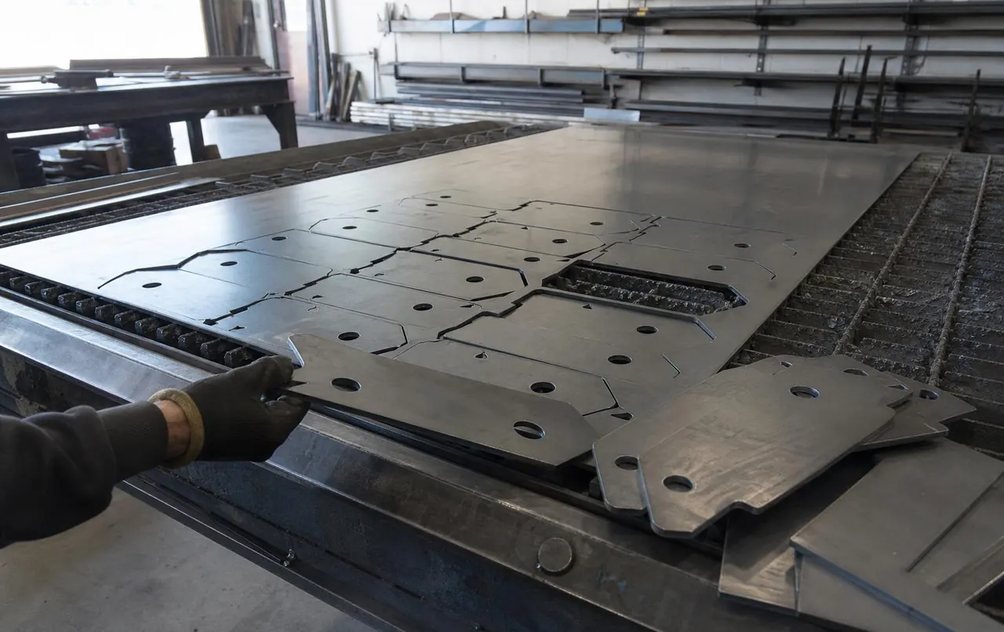
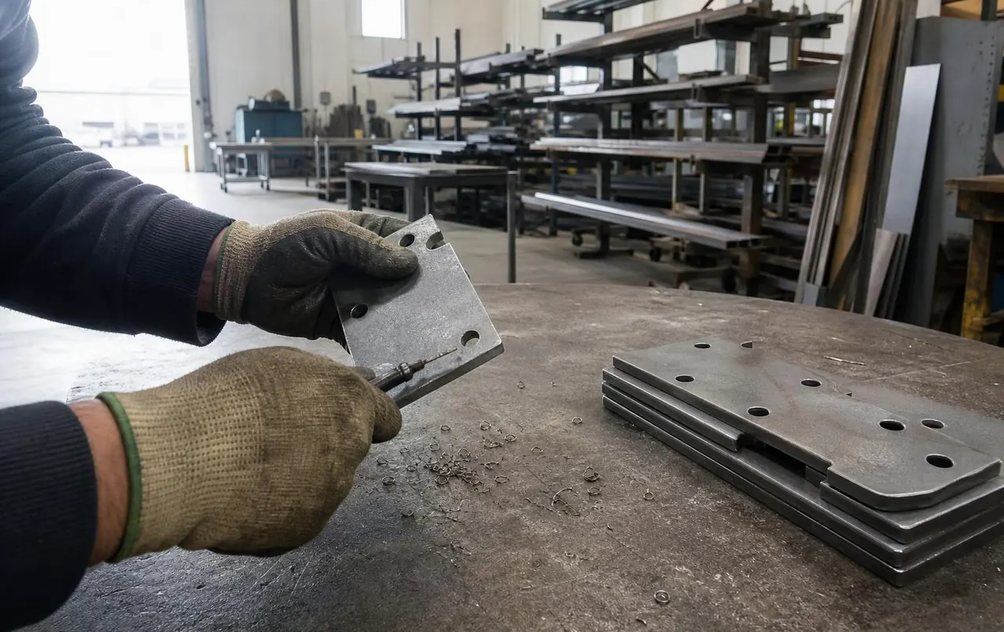
Not every hole needs to be machined. Holes cut on the cutting table or drilled after cutting are often good enough for clearance, and they cost less. Machining earns its place on features that locate parts against each other, faces that must sit flat, and threads that need to be clean and square. When we review your drawing, we sort the features into those two groups and explain the choice.
For aluminum parts, machining is usually smooth and quick. Steel takes longer and needs more care with heat and tool wear. Stainless is the slowest of the three, and its chips are tougher, so we plan the setup around that. All three are part of our regular work.
Keeping a program for next time
When a machined part moves from prototype to production, the program and the holding setup are the most valuable things in the job. We save both with your part number and the revision on the drawing. When you order the part again, we start from the saved setup and compare the first part from the new run to the one you approved.
Common questions about CNC metal machining
Which materials can you machine?
Aluminum, mild steel and stainless steel are our everyday materials. Ask about others and we will tell you honestly whether they suit our shop.
Can you machine a part I already have?
Yes. If you need a feature added to an existing part, such as a tapped hole or a flat face, bring or send the part and a note of what is needed.
Do you need a model file for CNC work?
A model file helps, but a clear dimensioned drawing is also fine. For simple parts, a sketch with the key dimensions can be enough.
How do you handle tolerances?
We confirm them in the quote in plain words, feature by feature, after reading your drawing. If a tolerance looks tighter than the part needs, we ask before quoting.
Often booked together
Parts rarely need one step only. These services are the ones most often quoted alongside CNC metal machining.
Your cookie choice. We use necessary cookies so pages and forms work. Optional analytics and advertising cookies stay off until you say yes. Cookie Policy
Cookie Choices
Choose which optional cookies this site may use. Your choice is kept for 180 days. A Global Privacy Control signal from your browser is treated as a rejection of optional cookies.
Strictly necessaryAlways on
Run the basic site functions and security, and store your cookie choice.
Count page visits in general terms. Stays off unless you switch it on.
Measure whether an ad led to a quote request. Off unless you turn it on.
Your browser sends a Global Privacy Control signal, so optional cookies stay off.