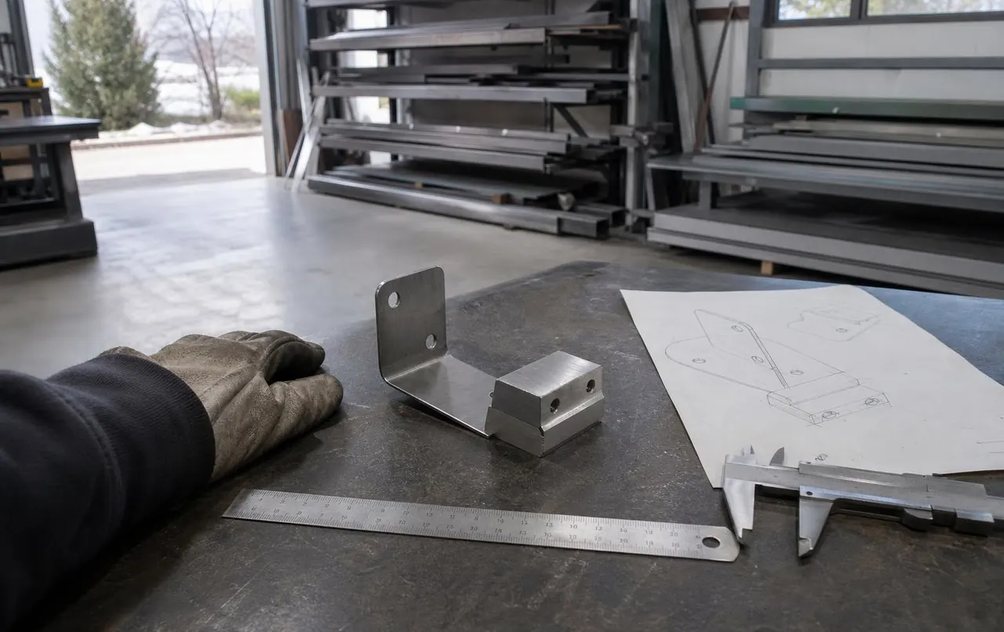
The prototype stage is where ideas meet metal for the first time. It is a stage of questions, short loops and honest conversations. You bring a drawing, a sketch or a part that needs to exist, and we make a version you can hold. Then you tell us what to change.
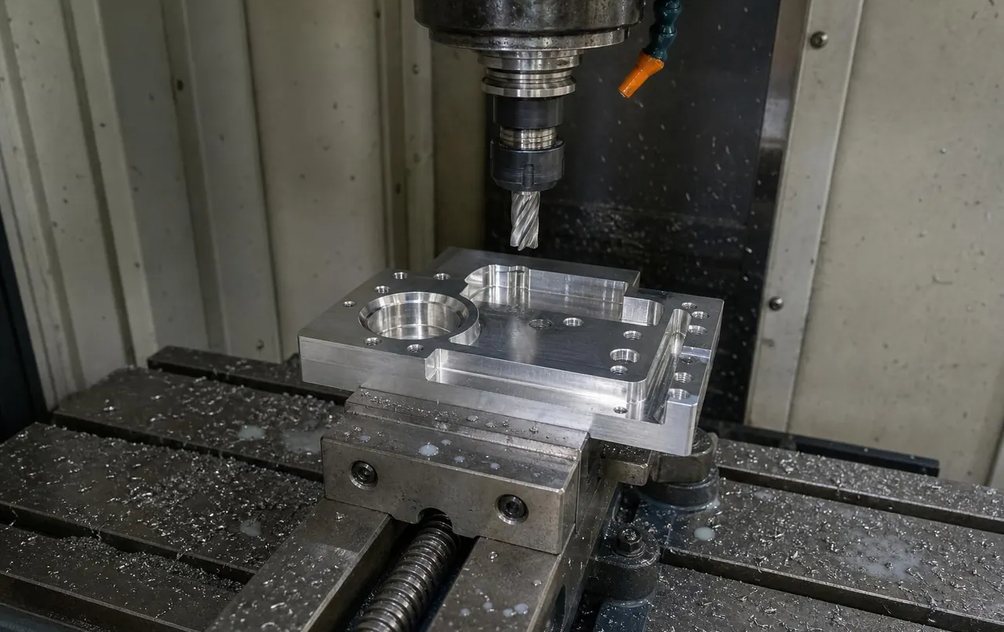
Two services carry most of this work. Metal prototype fabrication covers parts that are cut, bent and joined with hardware, which is where most early versions of brackets, covers and boxes live. CNC metal machining covers features that have to be cut away precisely, such as flat faces, pockets, bores and hole patterns that locate one part against another. Many prototypes use both.
A first version should answer the main question. Fine details can wait for version two, when you know they are worth it.
Write changes down
Each version gets a short note of what changed and why, so nobody relies on memory when the part moves on.
Think one camp ahead
We point out features that will be awkward in a small batch, while they are still easy to change.
What a prototype order looks like
Most prototype orders are for one to three pieces of a part, sometimes two variants side by side. We quote the first version on its own, and when you come back with changes we quote the next one. There is no commitment to order a batch. If the part does move on, the drawing, notes and any machining program are already in our files, which makes the next step shorter.
If you are not sure whether your part is a prototype job or a production job, ask. A part that is still changing belongs here. A part with an approved drawing that you need in a quantity belongs in production.
Your cookie choice. We use necessary cookies so pages and forms work. Optional analytics and advertising cookies stay off until you say yes. Cookie Policy
Cookie Choices
Choose which optional cookies this site may use. Your choice is kept for 180 days. A Global Privacy Control signal from your browser is treated as a rejection of optional cookies.
Strictly necessaryAlways on
Run the basic site functions and security, and store your cookie choice.
Count page visits in general terms. Stays off unless you switch it on.
Measure whether an ad led to a quote request. Off unless you turn it on.
Your browser sends a Global Privacy Control signal, so optional cookies stay off.