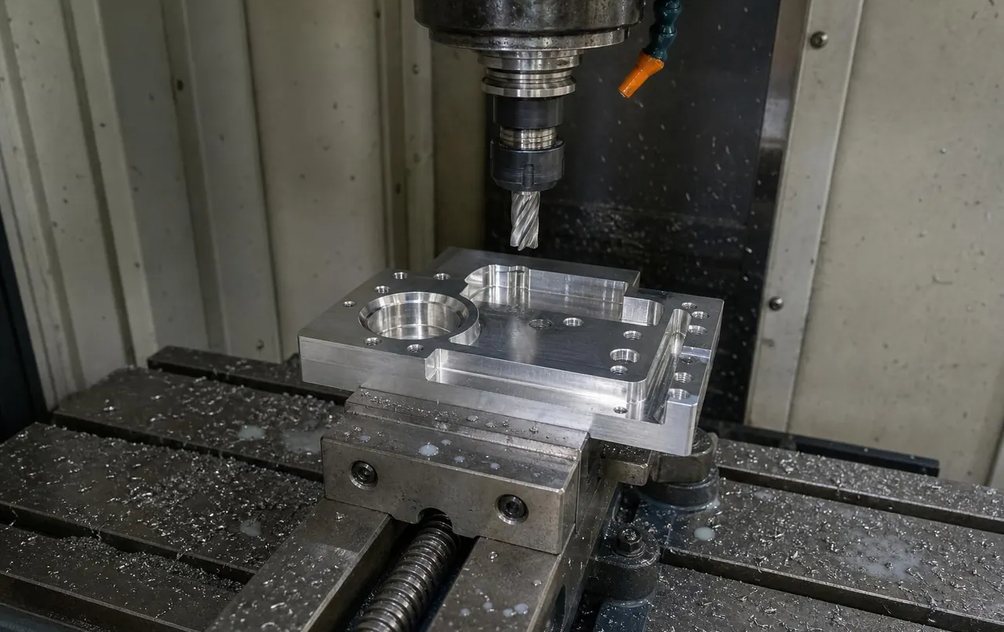
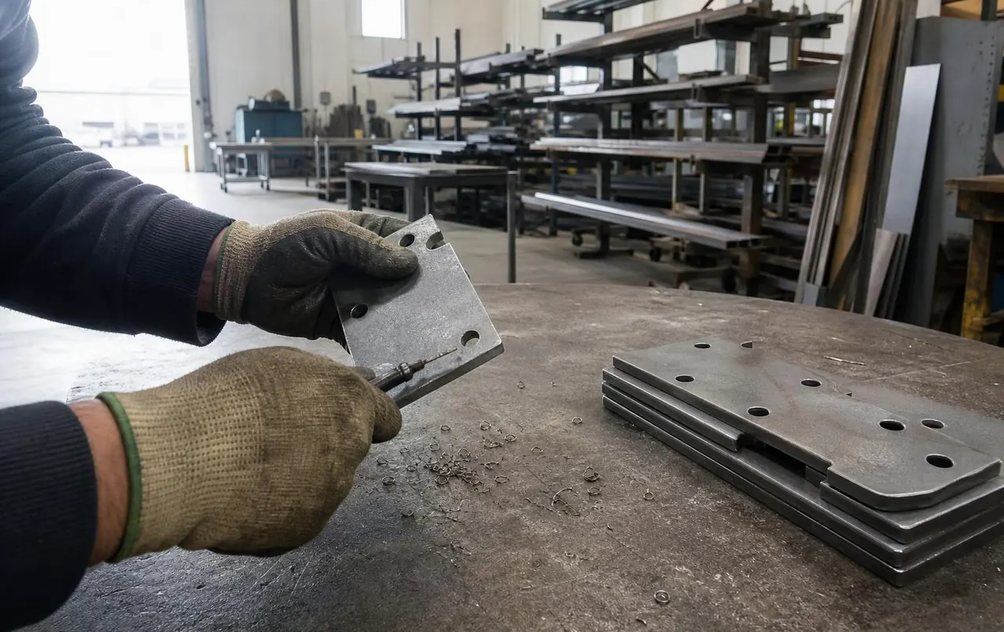
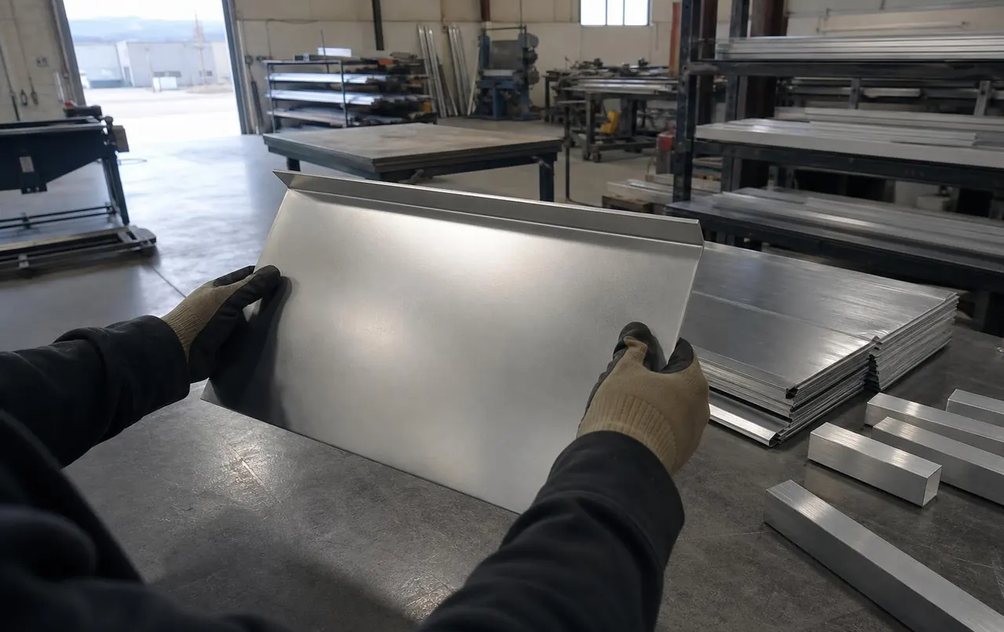
A prototype is a question in metal. Does the bracket clear the cable? Is the cover stiff enough with one bend or does it need two? Will the mounting holes line up with the frame that already exists? We make the part so you can answer those questions with something real on the bench instead of a picture on the screen.
Most prototype work at Mountain Metal Fab starts with whatever you have. Some customers send a full model file. Others send a dimensioned sketch on graph paper, a photo of a broken part with a tape measure in the frame, or a cardboard mockup. All of these are fine starting points. We review what you send before quoting, ask about the parts of the design that are still open and tell you which choices will be easy to change later and which ones are worth settling now.
We keep prototype setups light on purpose. Layout is done by hand or straight from your file, cuts and bends are set at the machine, and machined features are programmed one at a time. That way a second or third version costs you a conversation and some material, not a new fixture.
How a job moves through the shop
1
Send what you have
Drawing, sketch, model file or a sample part. Add photos of where the part has to fit.
2
We review and quote
We read the design, ask questions about anything unclear and send a written quote before work starts.
3
We make version one
The part is cut, formed or machined and cleaned up so it can be handled and fitted.
4
You try it and tell us
Fit it, load it, look at it. We change the drawing together and make the next version if needed.
Parts we often make this way
Mounting brackets and plates
Covers and guards for moving parts
Sheet metal boxes for electronics
Adapter plates between two products
Handles, tabs and clips
Fixture plates for your own assembly line
Designing a prototype that can grow up
A prototype that works is only half the job. The other half is a part that can be made again without a fight. While we build version one, we keep an eye on the features that will matter at the next camp: bend radii that match common tooling, hole sizes that suit standard drill and cutter sizes, and corners that can be reached with a deburring tool. When we spot a choice that will make a small batch harder, we mention it, and you decide.
This is also where material choice gets settled. Mild steel is forgiving and easy to change. Aluminum is lighter and machines cleanly. Stainless resists corrosion and needs more care in cutting and finishing. We can make the first version in one material and the next in another if you are comparing them.
Working with product teams and startups
Many of our prototype customers are small teams with a deadline of their own, such as a demo, a pilot customer or a trade show. Tell us the date you are working toward and what the part has to prove by then. We will be honest about what is realistic in the shop that week, and we will suggest a simpler first version if it gets you to a useful answer sooner.
Common questions about metal prototype fabrication
Do I need a finished drawing for a prototype?
No. A sketch with the key dimensions, a photo with a ruler in the frame or a cardboard mockup is enough for a first version. We turn it into a simple drawing as part of the job so the next version has a reference.
Can you make a prototype in more than one material?
Yes. Making the same part in steel and aluminum is a common way to compare weight, stiffness and finish before you choose.
What happens to my design files?
They are used for your job only. We keep them with your job notes so a later version or a small batch starts from the same file.
How do changes between versions work?
You tell us what to change after you try the part. We update the drawing, confirm the change in writing and quote the next version before cutting.
Often booked together
Parts rarely need one step only. These services are the ones most often quoted alongside metal prototype fabrication.
Your cookie choice. We use necessary cookies so pages and forms work. Optional analytics and advertising cookies stay off until you say yes. Cookie Policy
Cookie Choices
Choose which optional cookies this site may use. Your choice is kept for 180 days. A Global Privacy Control signal from your browser is treated as a rejection of optional cookies.
Strictly necessaryAlways on
Run the basic site functions and security, and store your cookie choice.
Count page visits in general terms. Stays off unless you switch it on.
Measure whether an ad led to a quote request. Off unless you turn it on.
Your browser sends a Global Privacy Control signal, so optional cookies stay off.