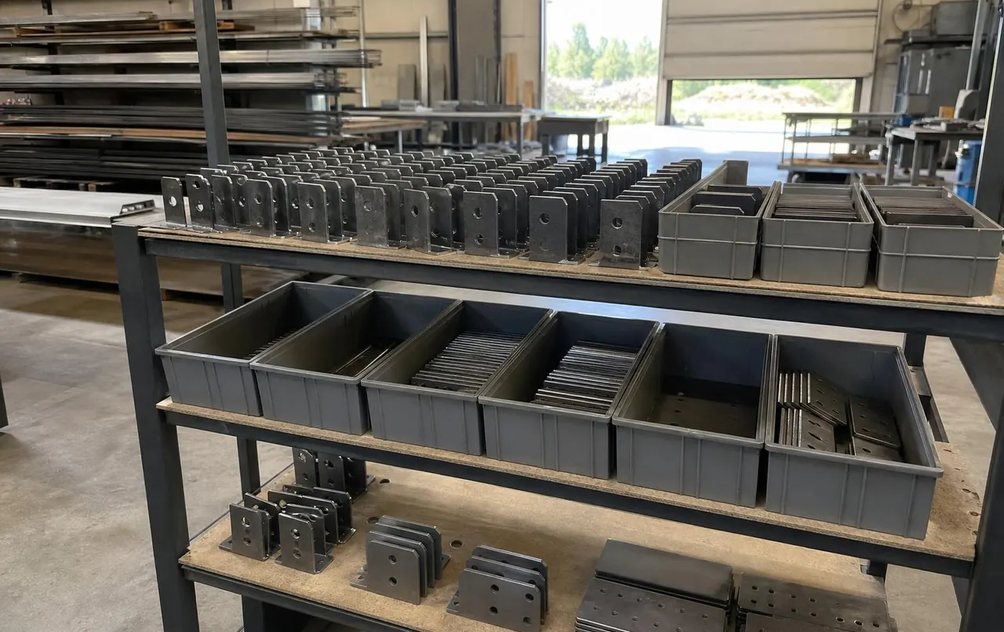
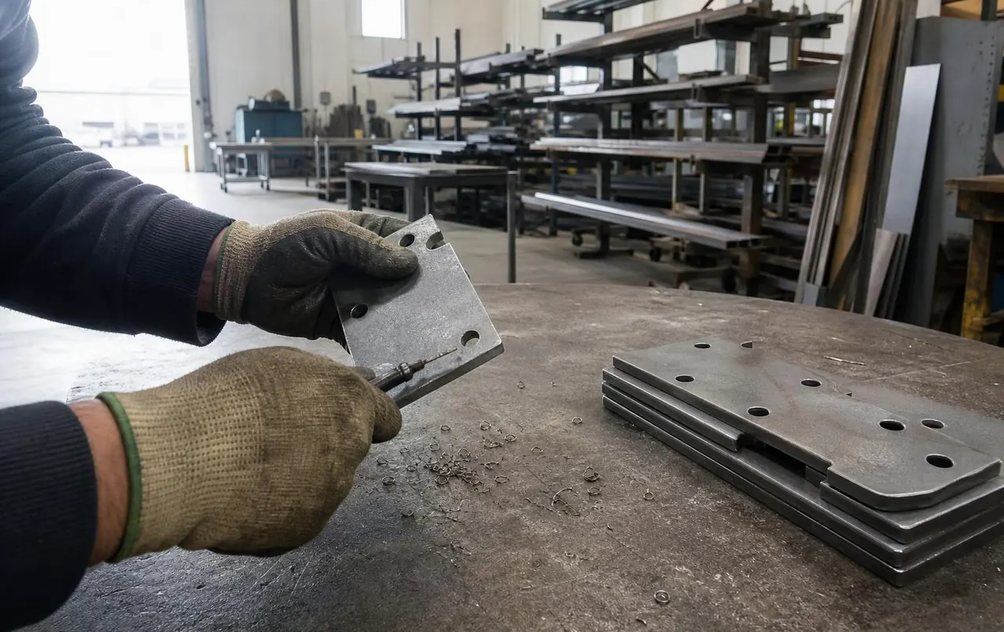
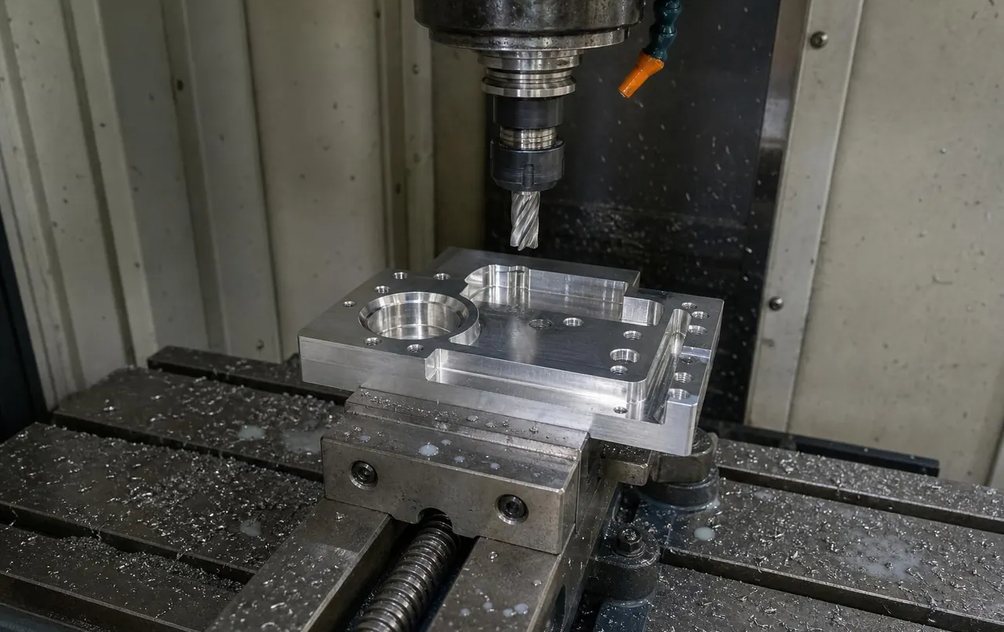
Every part we make starts with a cut, and the quality of that cut decides how much work comes after it. A blank that is square and true bends where it should. A flat part with a clean edge needs less deburring. A hole cut in the right place saves a drilling setup. Precision metal cutting is about getting that first step right so the rest of the job is simpler.
We cut flat parts from sheet and plate on a cutting table, square blanks on a shear, and bar and tube to length on a band saw with a stop. For each job, we choose the method that suits the material, the thickness and the edge you need. Flat parts are nested together on the sheet, which keeps material use sensible and lets several different parts come out of one sheet.
Cut parts can leave the shop as they are, or carry on to bending, drilling, machining and deburring here. Many customers use us for cutting alone because the parts arrive clean, counted and ready for their own line.
How a job moves through the shop
1
Drawing or flat file
A dimensioned drawing or a flat pattern file. Tell us the material and thickness if you know them.
2
Method and nest
We pick the cutting method for the material and nest the parts on the sheet or bar.
3
Cut and check
The first parts off the table or saw are checked against the drawing before the rest are cut.
4
Clean and count
Edges are cleaned up, parts are counted, and offcuts are kept if you want them back.
Parts we often make this way
Flat brackets and gussets
Base plates and mounting plates
Blanks for bent covers and boxes
Spacers, shims and washers
Cut lengths of bar and tube
Panels with cutouts for switches and vents
What decides the edge
Each cutting method leaves its own edge. A sheared edge is straight and slightly rolled on one side. A table cut edge follows any shape and may need a light clean up. A saw cut is square to the bar and leaves a small burr. When the edge matters, for example on a part that will be handled or seen, we plan the cutting and the deburring together so the finished edge is what you expect.
Thickness and material change the picture too. Thin aluminum cuts cleanly but can mark easily, so we handle it with care. Thicker steel takes longer and needs more edge work. Stainless keeps a sharp burr, which we always remove before parts are packed.
Saving material on every sheet
Nesting is the quiet part of cutting that matters for cost. When parts for one job, or several jobs for the same customer, share a sheet, there is less scrap. If you order several different flat parts, tell us in the same request so we can nest them together. Offcuts that are large enough to be useful can be returned with your parts on request.
Common questions about precision metal cutting
What thickness can you cut?
It depends on the material and the method. Send the drawing with the material and thickness and we will confirm in the quote how we would cut it.
Do you supply the material?
Usually, yes. We buy sheet, plate and bar to suit your job. If you prefer to supply your own material, tell us in the request.
Can you cut parts from a photo or a sample?
For simple flat parts, a sample part or a clear photo with a ruler can be enough. We draw the part first and send it to you to confirm.
How accurate are the cuts?
Accuracy depends on the material, the thickness and the method. We confirm the tolerances we will hold in the quote, in plain words, before cutting.
Often booked together
Parts rarely need one step only. These services are the ones most often quoted alongside precision metal cutting.
Your cookie choice. We use necessary cookies so pages and forms work. Optional analytics and advertising cookies stay off until you say yes. Cookie Policy
Cookie Choices
Choose which optional cookies this site may use. Your choice is kept for 180 days. A Global Privacy Control signal from your browser is treated as a rejection of optional cookies.
Strictly necessaryAlways on
Run the basic site functions and security, and store your cookie choice.
Count page visits in general terms. Stays off unless you switch it on.
Measure whether an ad led to a quote request. Off unless you turn it on.
Your browser sends a Global Privacy Control signal, so optional cookies stay off.